Showing posts with label Meal Planning. Show all posts

October 8, 2014

Create a Database

Last time I talked about meal planning, it was all about inventory and knowing what is in your kitchen. Again, this is extremely important when it comes to saving some moolah. By knowing what you have, you can actually use what you buy and not waste money on buying duplicates or buying more than necessary.


The next important part of planning is knowing what to do with what you have. You should begin to think of what you can make using items that you already have in your pantry. It is very helpful to create a database of recipes and meals that you can use to build your menu.

I know it sounds silly, but having a list of recipes and meals to choose from makes the planning process so much easier! You can build meals using what you already have then fill in the blanks with groceries.

I can't tell you how many times I've sat down to plan my meals for the week and have no idea where to start. I always ask my husband if he wants anything in particular and start there. His usual answer is, "Whatever you want," which is no help at all. So I turn to my inventory and see what I have on hand to see if I can make any meals using what is already there. See how that inventory comes in handy?

Now, you don't necessarily have to have a written list or even a collection if you feel you don't need it. I however have an awful memory and forget what I can make that is husband approved and what is required for the recipes. I also hate flipping through books trying to find a recipe and not being able to find it.

I've resorted to an online recipe manager that I absolutely love: Pepperplate. It is an app and an online database that makes recipe managing extremely easy. You can manually put in recipes from the web or your own collection. I have a few of my grandma's and mother's recipes that I have uploaded. But the best part is Pepperplate's affiliation with popular recipe websites, most of which I have pulled recipes from (i.e. Allrecipes, food.com, Eating Well, etc). You can copy the URL and the program will filter in the information along with any pictures. It actually has a meal planner of it's own! How convenient!

You can sync your computer account and phone together, so you are never without your database. I've pulled out my phone a few times to check the recipe to make sure I wasn't forgetting anything at the store. Please note I am not receiving any sort of compensation for reviewing this program, it is just what I use and am happy to share it.

I also use the old fashioned recipe box for paper recipes I haven't entered yet. Those are mostly acquired from my grandmothers, and I'll keep them just because :)

Do you have any recipe managers to share? Or alternate ways to keep recipes? Comment below!

September 3, 2014

Take Inventory!

Sorry for the hiatus. Life happened, as it always does. I'd like to say that it was for something other than "I was tired," but it wasn't. I'm covering for another facility while their RD is on medical leave. Needless to say, I crash when I get home.

So back to meal planning. (Woo! Meal Planning!) There are so many ways to do it, and hopefully you find the way that works for you. I'm going to share what works for me, starting with inventory.

I do believe this is the MOST IMPORTANT step in meal planning.  I always start my meal planning process by taking a look through my kitchen and seeing what is there. Chances are, you have more in your fridge and pantry than you think. The best part is? Those hidden treasures will help you save money at the grocery store! Also, it cuts down on food waste. I hate, hate, HATE throwing out food. The other thing that drives me crazy? Buying something that I already had, but forgot. Thankfully, both can be avoided.

Because my father was/is obsessed with Excel, I was raised on spreadsheets and continue to use them quite often. I came up with a spreadsheet I use to keep track of what is in the kitchen. I might seem a little excessive, but it has saved my tush a few times. I basically write down what I have, how much, and when it goes bad. I (try to) update it weekly.

Now, I know it seems like a lot of work, but it really does get easier the more you use it. I print it out and stick it to my fridge. After I go shopping, I'll write in what I got and cross things off when I use them.  Once your list is established, it takes a lot less time to fill out and see what you have in your kitchen.

Then we use what we have to make our meals! In food service, inventory falls under cost control, which is exactly what I use it for in my own kitchen.

I've uploaded the sheet onto Drive, so feel free to download it and use it if you'd like! Here is the link.

And as always, if you have any questions or comments please leave them below!

Thanks for reading :)


P.S. I have to adjust those margins a lot when I print out a blank sheet, just in case you were wondering how to get it down to 1 page


July 27, 2014

Meal Planning 101

I believe I have mentioned this before, but the reason I started a blog is because a friend made the suggestion that I should. I'm easily convinced, obviously. His blog is an instructional blog on how to couponing. It's pretty great, and you should check it out here. He gave the suggestion of starting an instructional blog on meal planning and ultimately, that is what I'm attempting to do.

Meal planning is one of the ways, if not the BEST way, to stick to a budget with food. For my husband and I, we spend about $50/week on groceries. **Note this is an average. I go both above and below depending on what's going on that week** If you plan, you can still save some money by stretching your purchases and not going hungry! You don't have to starve yourself to stay within budget. After a year of marriage, I think my husband finally believes that! It took a long time though...

There are many benefits to meal planning:
  • You can save money. I'm a broken record at this point
  • You eat healthier. If you plan in the right mind (i.e. not hungry), a well-balanced meal of garlic roasted chicken breast with asparagus and red potatoes might sound a lot better than a fast food burger.
  • Your family gets involved. I love asking the hubs what he wants for dinner for the upcoming week, then by the time we have it, he's super excited for the meal. 
  • There are fewer surprises. Fewer because things will always come up. It happens. But if you've planned your week of meals ahead of time, you'll know exactly what is is coming. This can actually...
  • Save time! Thaw that meat the night before or throw the meal in the crock pot before you go to bed, put it in the fridge and start it as you're running out the door in the morning. Knowing what we're having for dinner has saved my tush a few times. 
  • You waste less food. I can't stand throwing food away. If I plan a week and actually stick to the plan 100%, my fridge is pretty empty by Saturday. I love it. 

I can go on and on about meal planning benefits, but truth of the matter is it might not be for everyone. Over the next few weeks, I'll go over my method of planning and give step by step tutorials on all things involved. I can't guarantee that my methods will work for you and your family, nor can I guarantee that it will save you X-amount of money. But hey, it's worth a shot ;)


July 1, 2014

An Apple A Day Keeps the Doctor Away

It isn't a saying for no reason, that is for sure. The final food group I'm going to really cover is of the colorful variety. Fruit is great because it is healthy and good for your diet.  Very rarely can you find someone who doesn't like any kind of fruit. That's because fruit is delicious...duh.


Why, you ask? Because it has a whole load of sugar in it. (GASP) I know, its life shattering. But don't worry! It's a good sugar, if there is such a thing. The sugar is natural, not added, therefore not "bad" for you. I like to think that fruit has that wonderful, sugary taste because God wanted you to be able to eat something healthy that didn't taste like the ground.

Fruit is considered a nutrient dense food, meaning you get lots of benefits from eating just a little. Many essential nutrients that are under-consumed in the general diet can be found in fruits like potassium, dietary fiber, and vitamin C. These specific nutrients can lower your risk of heart disease, diabetes, and some types of cancers. The fiber itself has many benefits, including reducing cholesterol and regulating bowel function. I always tell my patients who are having some bowel issues to eat bananas. They usually look at me like I'm crazy, which is debatable, but I promise it can help!

My favorite benefit of eating fruit is the amazing effects it can have on your skin! Fruits are full of vitamin C which is a key ingredient in skin cell formation. They are also chalk full of antioxidants and the majority are made of mostly water, which we can all use more of. Think of fruit as a resurfacing agent. Who needs those expensive creams?? Just grab some oranges!

The USDA recommends consuming 2 cups of fruit per day. This may sound daunting, but I like to eat fruit as a snack and can easily get in two cups. This brings up fruit's best qualities: it is generally low in calories (not carbs) and can be helpful in filling you up.  For example, a cup a grapes (lots of antioxidants and vitamin K) is about 100 calories. How many grapes in a cup? 32. Yes 32. That's a whole bunch if you were wondering. Definitely fills me up, and I didn't break my calorie bank for the day! It also satisfies a sweet tooth if you have one. See? Good sugar!

I don't incorporate fruits into meals very often, unless I am scrambling for more to eat. But like I said, they usually make an appearance as a snack. Fruit can get expensive, especially if it isn't in season. I am not against canned fruit, and usually recommend it for my clients who are trying to stretch a dollar. As long as the fruit is in natural juices, there is no added sugar and still as nutritious as fresh...although fresh is always better tasting in my opinion.


OKAY, I'm done rambling about food groups. Now I can move on to more interesting things! Get excited. I might post a recipe next, so if you have any suggestions, let me know!

April 29, 2014

Vegetables and Stuff

Back to food!

Soooo Vegetables. The ever important part of a meal that we often forego...or at least I have a bad habit of doing so. Let's back track a bit so I can explain my history with vegetables. Where I grew up, there are four vegetables...potatoes, corn, peas, and green beans. Tomatoes are in there too, but some consider it a fruit (I'm on team veggie!). Needless to say, I was not raised eating many vegetables, therefore "hated" them whenever they were offered. When I got to college, I forced...literally....myself to learn to eat new things, most of which were vegetables. I've had to learn many ways to incorporate vegetables into meals where I won't hate eating every bite.


So why are we told to eat our veggies? Why is there so much hype about them? Well, in terms on nutrition, they are like a gold mine for vitamins and minerals, like seriously the mecca of nutrition availability. Eating a diet rich in veggies may lower your risk of developing cancer and/or heart disease. They are low in fat and calories and carbs! Well, most are low in carbs... except the good ones I mentioned earlier in this post. Veggies are also good for your skin, eyes, and teeth.

Green, leafy vegetables are where it's at. In my vitamins class I took in college (yes, a whole class devoted to vitamins...I actually took two) if I didn't know the answer to a question, I'd put green leafy vegetables, and usually got the question right. Colors are important when it comes to vegetables. A variety of colors means a variety of nutrients, so "eating the rainbow" is a good rule of thumb. Skittles was headed in the right direction with their slogan.

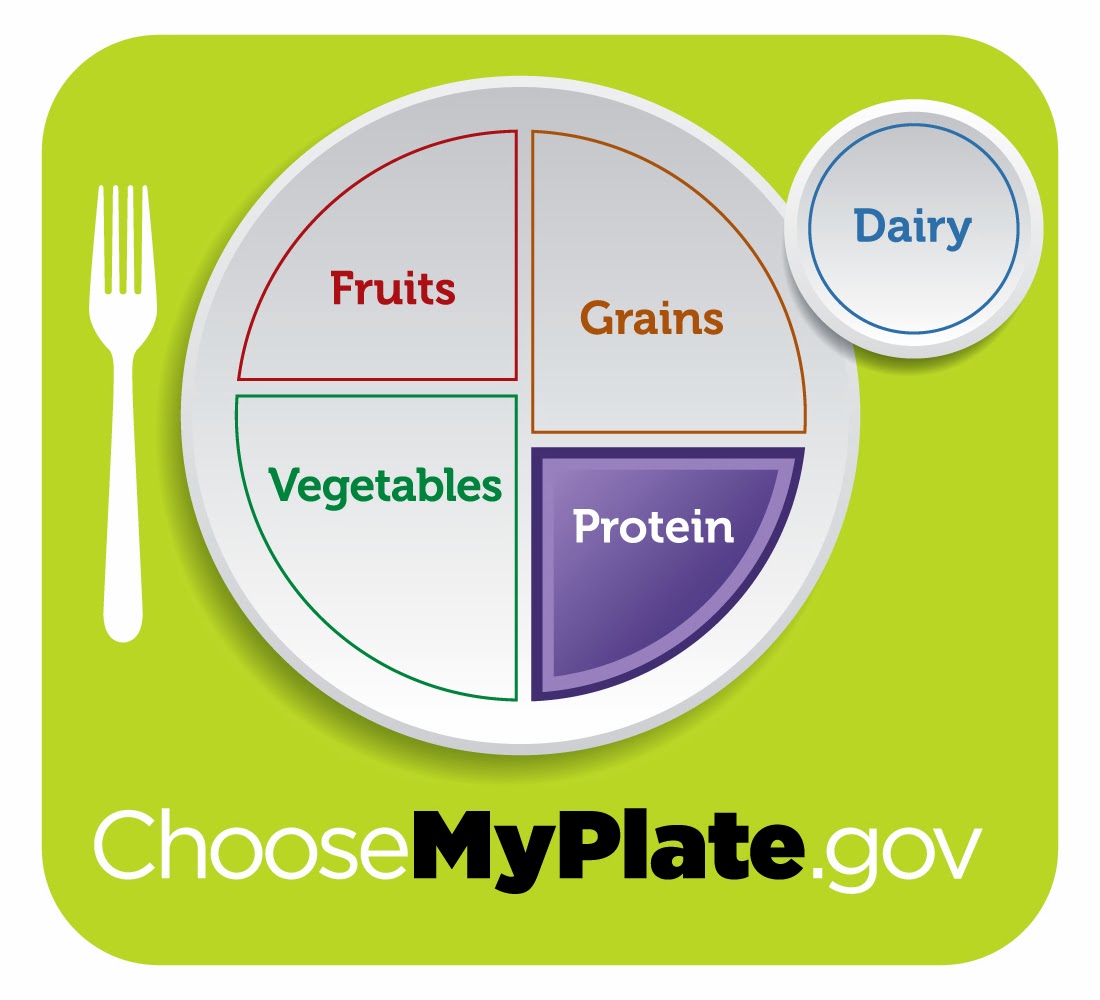
The USDA has a general guideline of making half of your plate vegetables (and fruits). That may seem like a lot of vegetables, but most of the times the "plates" we are thinking of are much larger than the plate they are referring to.

Vegetables have a bad rep for being expensive, and it's true, they can be...if you don't know what to look for. Buying in season is extremely important if you want to buy totally fresh. But if you live in the midwest like I do, seasons are ever changing, and man do they change fast. Frozen is your next best choice. I like to stock up on bulk and always have a few different veggies on hand. Canned is a last resort, however it is usually the cheapest option. Canned foods have a bad rep right now because of high sodium content and other chemicals used to preserve them. Just wash them! Wash the food after you take it out of the can and before you cook them. Part of the problem solved! Buy buy fresh if you can ;)

I'm planning on posting some recipes that I use to "hide" my veggies so I can eat them. Hopefully sooner rather than later!

IN OTHER NEWS! I purchased a Kitchen Aid mixer like 20 minutes ago. I AM SO EXCITED! Here's to more cooking!

January 21, 2014

Proteins!

Two days isn't bad right? I meant to post yesterday, but we have small group on Monday's. When I get home from group, I'm pretty much out for the night. I've hit old lady status in my book. Also my dog is teething, so I have to keep her from chewing on anything and everything...including walls...

Ok Mallory, Focus....Let's learn how to build a meal! It sounds so simple, and it is. You just need to make sure you have all of the parts of the puzzle. Now, I'll be the first to admit, I don't always have all of the parts, but I try my hardest to have a varied meal that incorporates all of the food groups. Trust me, it is easier than you may think.

So let's dive right in shall we? I decided to be biased and post my favorite food group first: Proteins. Proteins play a HUGE part in your body, I'm talking molecular level important. So it is important to have adequate protein in your diet. Basically, your DNA wouldn't replicate without it, which would be bad...so don't cut out protein...please. 

Protein Sources:
  • Meat, Eggs, Fish (no brainers)
  • Dairy Products
  • Legumes, Nuts, Seeds
  • Whole Grains/Cereals
  • Fruits and Vegetables (protein content is minimal in comparison)

Your body needs multiple sources and different kinds of proteins to work correctly, which is where vegetarians can run into issues. Vegetarians need to eat multiple foods to make a complete protein that the body can use, whereas animal proteins usually make up a complete protein. A lot of times, those who are vegetarian don't know how to replace what they aren't getting from meat with other foods. 

ANNOUNCEMENT: I am not against vegetarianism by any means. I just couldn't do it myself. 

Now that that is off of my chest, I can move on. 

It is my preference to begin planning a meal with the meat. For the vegetarians out there, this can be translated to your protein source of choice. I try not to have the same protein source more than one day a week, or at least try to spread them out (I could eat chicken every day). Every once in a while, I'll have a meatless meal, but my husband usually whines when this happens and ends up eating a snack later on. I think he is just being dramatic. Proteins can be very filling, regardless of what kind.

For example, the other day I had broccoli and cheddar soup. There was a hefty amount of cheese in the soup, and it had a milk base. That's enough protein for me, so no meat for that meal. Plus meat can get expensive, so meatless meals are OK for me. 

How much do you need? Well for adults, the USDA suggests having 5-6oz equivalents a day (see the website for specifics), and it should be 1/4 of your plate. 3oz of meat is about the size of a woman's palm if you were wondering. Most Americans eat too much protein on average, just a fun fact. Too much protein can contribute to wt gain...(dangit).  But when it comes to cost savings, this works out in our favor. 4 chicken breasts can technically count as 8 -3oz servings of protein. I eat by this portion size, my husband doesn't. It's up to you. 

I feel like I'm rambling at this point, so I'm going to stop talking, er um typing. 

Moral of this story:
  • Proteins are important
  • Suggested serving size is 3oz
  • To me, it is the main event of the dish

Hope I didn't confuse anyone! As always, any questions, feel free to leave them below! I'll hit on every female's favorite food group next time...bet you can't guess what that is ;)